Overlooked in Atlanta, Black Female Artists Try Miami
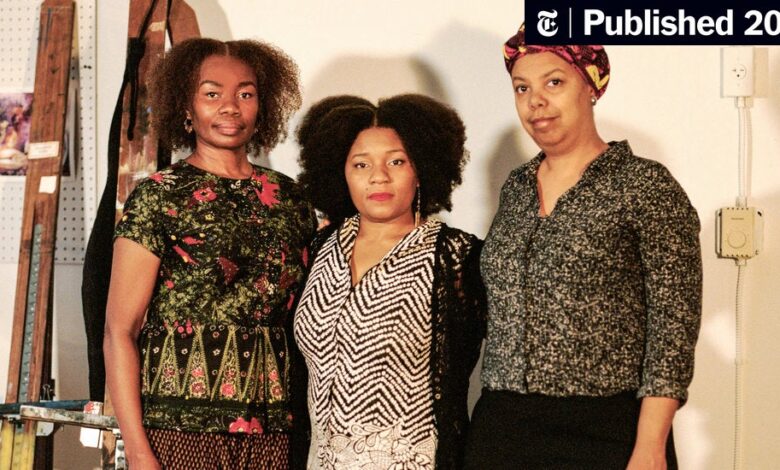
Ms. LaTrice has made it her mission to change that. Several months ago she contacted Franklin Sirmans, director of the Pérez Art Museum Miami (known as PAMM), a contemporary art museum, about presenting the women’s work and hosting a brunch during fair week. While Mr. Sirmans was unfamiliar with Ms. LaTrice’s group, he has had his eye on Atlanta as an epicenter of black culture since he studied at Morehouse College there.
With sponsorships and crowd funding support, the group headed to Miami. In addition to Ms. Johnson and Ms. Kisa, it included the painters Ariel Dannielle, Ebony Black and Sachi Rome; the multimedia artists Christa David and Shon Pittman; the graphic artists Ayanna Smith and Jasmine Nicole Williams; and the photographer Evelyn Quiñones. Their work would be on display on video screens at PAMM during Art Basel.
Kate Atwood, executive director of ChooseATL, a program of the Metro Atlanta Chamber of Commerce, acknowledged that the city had a long way to go before it could compete with New York and Los Angeles in creating a supportive ecosystem for artists. (ChooseATL followed the artists’ journeys to Art Basel Miami Beach on its streaming channel, THEA.) “We need to make sure that we’re not losing that talent anymore,” Ms. Atwood said.
Signs of progress made by nonwhite artists have filled the news, from rising museum acquisitions to new curatorial positions to the top prices gained recently in auctions. Yet African-American artists and curators interviewed for this article said progress comes slowly, with many barriers to success. According to the Atlanta Convention & Visitors Bureau there are 50 art galleries for a city of nearly 500,000 people — in a state that bounces between 48th and 50th in arts funding.
The artists spoke of limited access to the city’s cultural gatekeepers, who are mostly white. In addition, many black women who are the primary breadwinners for their families cannot afford the studio fees, ranging up to $1,000 per month, that would grant them access to a peer network.
An artist herself, Ms. LaTrice, 29, understands their struggles. Born in Chattanooga, Tenn., she moved to New York and then to Atlanta after earning her master’s degree in women’s history from Sarah Lawrence College. She had no network or connections before she formed TILA. Today her studio trains women how to write a strong artist statement, develop a CV and shoot their work professionally, not just on an iPhone. Her studio is a resource “so they don’t feel alone,” she said.


