For These Families, H.B.C.U.s Aren’t Just an Option. They’re a Tradition.
On the other hand, the H.B.C.U. “was very much intended to be a place of nurturing, a place that recognized that the world was not very kind to those of African descent. That really has been the secret sauce of H.B.C.U.s.”
More than most people, perhaps, Dr. Watkins has witnessed the impact of the H.B.C.U. experience on a personal level, as well as in society at large. Her familial connection to Morehouse graduates includes a close relative whose name is synonymous with social change.
“Everybody knows the name Martin Luther King Jr., but they don’t really think about the context that he came out of,” Dr. Watkins said, referring to the civil rights leader who was also her uncle. It was during his time at Morehouse that the Rev. Dr. King was called to the ministry and first heard about Mahatma Gandhi and the concept of nonviolent resistance. Both King’s father and his grandfather also graduated from Morehouse, which Dr. Watkins credited for encouraging them to become “entrenched in social justice causes — not just involved, but leading.” For example, King’s predecessors cultivated a robust congregation at Atlanta’s Ebenezer Baptist Church and helped found the Atlanta chapter of the N.A.A.C.P. in 1917.
The H.B.C.U. influence on King ran even deeper, said Dr. Watkins — his mother, sister and grandmother all attended Spelman and went on to become community activists. “My uncle would say the arc of the moral universe is long, but it bends toward justice,” Dr. Watkins said. “Well, H.B.C.U.s are helping that arc bend toward justice.”
Not only that, Dr. Watkins said, but these family legacies will continue to shape the future. “H.B.C.U.s have been a game changer for the whole world because of — or through — African Americans who have been lifted up, anchored, equipped to set about change in the world.”
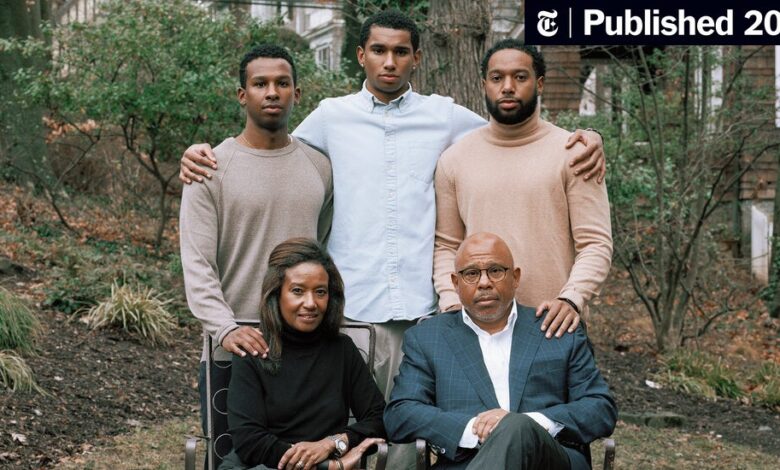
Mr. Cain’s son Preston is currently in high school and thinking about his educational future. No decisions have yet been made but Mr. Cain is hopeful that his family’s streak might continue. “I would love to be around long enough to see a grandson or granddaughter go to a Morehouse or Spelman,” he said. “Now, if they chose not to, I’ll still love them the same. But would my heart skip a beat if they say, ‘Hey, I want to go’? Absolutely.”
Caroline Clarke contributed research.