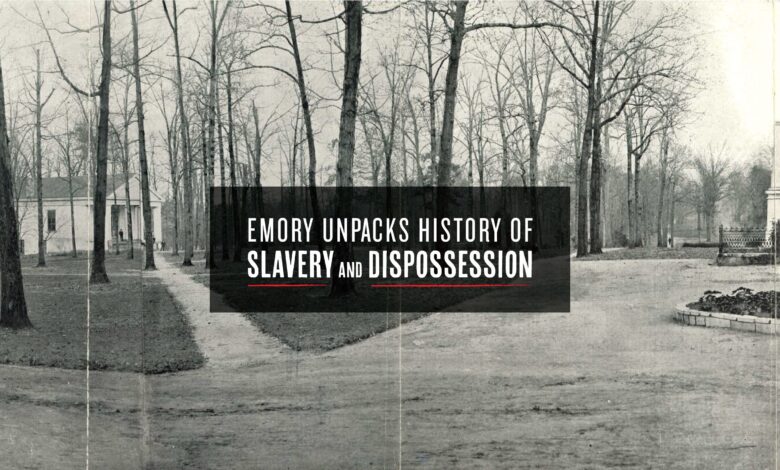
Emory unpacks history of slavery and dispossession
Progress for Native American and Indigenous students has been slower. Emory currently has 24 students who self-identify as American Indian/Alaska Native, four faculty and staff members and just over 200 alumni.
One of those graduates was Twilla Haynes, a member of the Lumbee Tribe. In 1980, she became the first Native American to earn a master’s degree from the Nell Hodgson Woodruff School of Nursing. In the late ’80s, she also became the nursing school’s first Native American faculty member. Her daughters Hope Haynes Bussenius and Angela Haynes Ferere also earned nursing degrees from Emory and teach here.
In 1993, they started Hope Haven Orphanage and Eternal Hope in Haiti. During the summers, Haynes took students abroad to learn and practice skills there. Haynes earned the Emory Medal in 2010. She died in 2020 and the Twilla Haynes Faculty Award Fund is being established in her honor.
In addition to the example set by trailblazers like Haynes, the Emory Native American Initiative is meant to encourage more Indigenous students to apply for admission to the university.
Students such as junior Sierra Talavera-Brown want to create a stronger sense of belonging for Indigenous students on campus. Talavera-Brown, who is a human biology and anthropology major, grew up in Guilford, Connecticut, where she often felt isolated in her predominantly white schools. When she came to Emory, she found herself longing for a sense of community.
“It’s hard to imagine some of my cousins going to Emory because of the social exclusion and lack of acknowledgement,” says Talavera-Brown. “The imposter syndrome and feeling like you’re not good enough… I grew up having to do that.”
Talavera-Brown, a Dine woman and a member of the Navajo Nation, along with others, is working to create the first organization for Indigenous students in Emory University’s history.
“Last fall was the first time that Emory ever acknowledged Indigenous Peoples Day,” says Talavera-Brown. “That’s a step in the right direction, but it’s only a first step. Even in my classes, no one can tell you where we are unless they are intertwined with that history. We are taught that this is a thing of the past. No one is aware of the ongoing forces of colonialism.”
Earlier this week, Fenves announced that the Board of Trustees has approved an official land acknowledgment. Based on a recommendation from the Task Force on Untold Stories and Disenfranchised Populations, the statement recognizes “the Muscogee (Creek) people who lived, worked, produced knowledge on and nurtured the land where Emory’s Oxford and Atlanta campuses are now located” and “the sustained oppression, land dispossession and involuntary removals of the Muscogee and Cherokee peoples from Georgia and the Southeast.”
Fenves also announced the formation of a working group to advance plans for the development of an outdoor Language Path on the Emory campuses to honor the Muscogee (Creek) Nation and highlight the Muscogee language and culture, another recommendation from the task force.
“I think our ancestors would be proud of the work that we are doing now,” says Lowery, who helped write the acknowledgement. “The Muscogee Nation has had such a long history of education on this land. Knowledge is not something you hoard, it’s something you share.”
The land acknowledgement will be read for the first time at the upcoming symposium, “In the Wake of Slavery and Dispossession,” Sept. 29-Oct. 1 on the Atlanta and Oxford campuses.
The symposium will offer the entire Emory community a space to learn and have conversations about the university’s complicated history. During the event, students and faculty from Emory and beyond will give presentations and performances on everything from Indigenous poetry and music to the relationship between Black nannies and white children.
At the symposium attendees will be encouraged to interrogate the ways that race and land ownership impact social, political and economic systems at Emory and beyond.
As Emory looks toward the future, the goal is to create a greater sense of belonging for everyone who arrives on campus.
“I am inspired by the engaged Emory faculty, staff, students and alumni who have the courage to hold our institution accountable,” says Fenves, “and lead us in telling a more complete story about where we have been and who we are so we can build a more equitable, diverse, inclusive and vibrant university.”
About this story: Published Sept. 28, 2021. Story by Kelundra Smith. Photos by Emory University Archives, Kay Hinton, Library of Congress and personal contributions from Marsha Houston, Avis Williams and Anderson Wright. Design by Laura Dengler.