It Takes a Village: How Atlanta’s Storytellers Are Reclaiming the Narrative
A Village Built on Story
For more than two decades, the Peachtree Village International Film Festival has carried a simple conviction in its name: it takes a village. Founded in 2005 by James JB Brown and Len Gibson, the festival returned to Atlanta from November 5 to 8, 2026 for its 21st annual edition, filling the Courtland Grand Hotel with filmmakers, journalists, publishers, and students who believe that the stories told in this city belong to the people who live them. What unfolded across four days was less a red carpet spectacle than a working summit on who gets to hold the microphone and what they choose to do with it.
Soledad O’Brien and the Power of Ownership
The clearest lesson arrived on Saturday, November 7, during the featured program Beyond the Headlines: Truth, Power and Purpose. Soledad O’Brien, the Emmy and Peabody Award winning journalist whose documentary work includes Black in America and Latino in America, walked the audience through her evolution from network anchor at NBC News and CNN to founder of Soledad O’Brien Productions. Her message was direct. Owning the camera is not a vanity project, it is a business decision that protects the story. When a journalist controls production, O’Brien explained, the reporting no longer bends to the priorities of a distant boardroom. Moderator Dr. Rashad Richey, the Emmy Award winning commentator, pressed her on the economics of that independence, and her answers gave the room a practical roadmap rather than a slogan.
Ambassador Dr. Jacqueline Mohair: Publishing With Purpose
That same instinct for ownership has defined the work of Ambassador Dr. Jacqueline Mohair, publisher and founder of Trinity International University of Ambassadors and the Trinity Girls Network, which holds Special Consultative Status with the United Nations Economic and Social Council. Dr. Mohair has built a network of publications, among them ATL Black Voices Magazine, Narrative Edge Magazine, She Emerge Magazine, Honors of Distinction Magazine, and UN Women Magazine, around a single premise: a community that publishes its own achievements never has to wait for permission to be seen. Her conversations with O’Brien during the festival centered on how purpose driven storytelling can serve both humanitarian and educational goals without sacrificing editorial rigor.
Dr. Jerome Dorn and the New Media Infrastructure
Storytelling also requires machinery. Dr. Jerome Dorn, a military veteran and filmmaker whose 2025 short film A.I. Break Up earned recognition as a festival finalist, demonstrated what that machinery looks like in practice. Through InDaHouseMedia, his team delivered full festival coverage by combining film, photography, and digital journalism under one roof. The result is a self contained media ecosystem, one that documents a community event without depending on legacy gatekeepers to decide whether it matters. For young creators in the room, the model answered a question that rarely gets addressed out loud: how do you build distribution before you build an audience.
What It Means for Atlanta
Atlanta has long been a capital of Black media, from the publishing dynasties of Auburn Avenue to the studios and networks that now call Georgia home. The 21st Peachtree Village International Film Festival made clear that this legacy is being extended by people who refuse to separate craft from community. The journalists, publishers, and filmmakers who gathered here are not waiting for validation from elsewhere. They are building platforms, training successors, and documenting their own neighborhoods with the seriousness those neighborhoods deserve. That is the village the festival was named for, and in 2026 it looked stronger than ever.

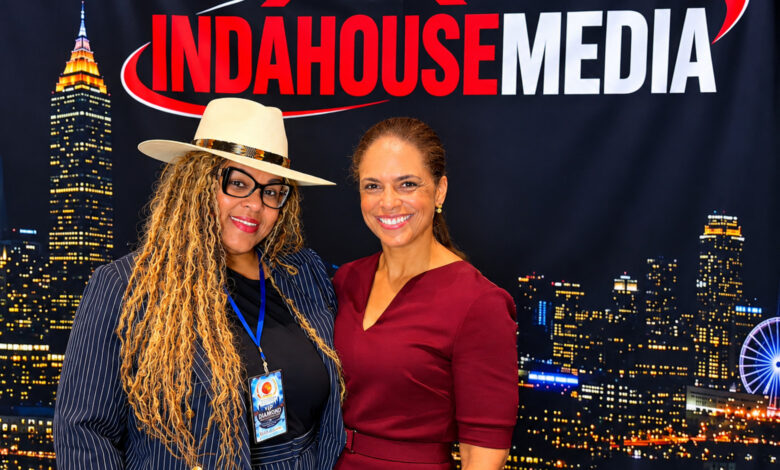
Festival principals, journalists and media professionals on the red carpet at the 21st Annual Peachtree Village International Film Festival in Atlanta. Photo: InDaHouseMedia.